Paylaş
Flying Broom Does Not Forget, Does Not Let Others Forget
Flying Broom Remembers, and Keeps Memory Alive
Women’s Memory and Resistance at Flying Broom
The Flying Broom International Women’s Film Festival will bring together audiences with the Turkish and Ankara premieres of 47 films from 23 countries between 2–7 June at Kült Kavaklıdere Cinema and the 100th Year Republic Culture Center. Tickets will go on sale via Biletinial at 12:00 on Monday, 11 May.
Organized by the Flying Broom Foundation, the festival will take place with the support of the Ankara Metropolitan Municipality, the Delegation of the European Union to Türkiye, Çankaya Municipality, Etimesgut Municipality, and Mamak Municipality. Over the course of six days, audiences will have the opportunity to watch Turkish and Ankara premieres centred on themes of memory and resistance, gathered across nine sections, while also participating in various side events.
The International Federation of Film Critics (FIPRESCI) jury, which will evaluate the international competition section Each One a Different Colour, consists of Ece Vitrinel from Türkiye, Nadia Meflah from France, and Omnia Adel from Egypt.
The festival’s opening ceremony will be held on the evening of 2 June at the Ankara State Opera and Ballet. Hosted by Şenay Gürler and Yetkin Dikinciler, the ceremony will present the Honorary Award to veteran actress Emel Göksu, whose career spans theatre stages as well as film and television productions. Göksu began her film career with Kaçaklar, directed by Şerif Gören and starring Yılmaz Güney, and later delivered memorable performances in films such as Mutluluk by Abdullah Oğuz, Kuzu by Kutluğ Ataman, and Koridor and Döngü by Erkan Tahhuşoğlu.
This year’s Bilge Olgaç Achievement Awards will be presented to Lúcia Murat, a feminist voice of resistance in Brazilian cinema; Dilde Mahalli, one of the leading representatives of the younger generation of producers in Turkish cinema; and Melisa Sözen, whose nuanced performances have carried her career beyond Türkiye into international productions. The festival’s Young Witch Award will be presented to Ece Bağcı.
Lúcia Murat, who will attend the festival in Ankara as a guest for the first time in Türkiye, will also deliver a masterclass at Kült Kavaklıdere on 3 June. A three-film tribute program dedicated to Murat will be presented during the festival.
Over recent years, Dilde Mahalli has emerged as a significant figure supporting women’s filmmaking in Türkiye through her collaborations with directors such as Pelin Esmer, Emine Yıldırım, and, most recently, Pınar Yorgancıoğlu. Last year, she also received the FIPRESCI Award at the Flying Broom International Women’s Film Festival for Gündüz Apollon Gece Athena.
One of the defining performers of Turkish cinema and television since the 2000s, Melisa Sözen gained international recognition following her role in Winter Sleep by Nuri Bilge Ceylan, which won the Palme d’Or at the Cannes Film Festival in 2014, after earlier appearances in Waiting for Heaven by Derviş Zaim and Av Mevsimi by Yavuz Turgul. This year, she received acclaim for her performance in Roya, directed by Mahnaz Mohammadi, which premiered in the Forum section of the Berlin International Film Festival.
Nineteen-year-old Ece Bağcı, whose performance in About Dry Grasses brought her international attention following the film’s premiere in competition at the Cannes Film Festival in 2023, received the Best Supporting Actress Award at the Chicago International Film Festival and continues to work across cinema, theatre, and television.
Striking Festival Sections
This year’s Flying Broom International Women’s Film Festival is once again composed of nine distinct sections: Each One a Different Colour, the international competition where the FIPRESCI Award will be presented; Close-Up, bringing together works by women filmmakers from Türkiye; Short Reflections from Around the World, devoted to innovative cinematic approaches; and Focus: Canada, a selection of five short films presented with the support of the Embassy of Canada in Ankara.
The program also includes the festival’s longstanding section Beyond Pink and Blue, centred on questions of identity; Rule Breakers, dedicated to films that overturn conventions of form and content; A Tribute to Lúcia Murat, prepared with the support of the Embassy of Brazil in Ankara; and In Memory of Judit Elek, featuring three restored classics by the Hungarian master filmmaker, who passed away on 1 October 2025.
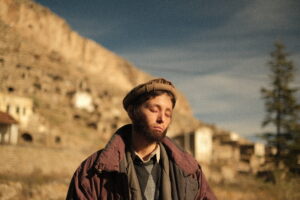
The eight films competing this year in Each One a Different Colour bring together stories of women’s resistance and existence across different geographies. Kuru Taşın Başı by Yeşim Ustaoğlu and Selen Heinz focuses on villages submerged by the construction of the Yusufeli Dam and on communities forced to migrate. Cinema Jazireh by Gözde Kural, winner of the Ecumenical Jury Award at the Karlovy Vary International Film Festival, follows a woman searching for her missing son amid the tragedy unfolding in Afghanistan.
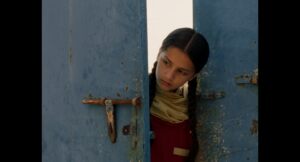
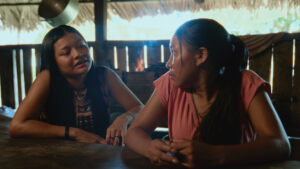
Directed by Aldira Akay, Beka Munduruku, and Rilcélia Akay, Mundurukuyü – A Floresta Das Mulheres Peixe intertwines the culture of the Munduruku people in the Amazon with women’s resistance against ecological destruction through mythological narratives. Ghost School by Seemab Gul tells the story of a ten-year-old girl fighting for her right to education against superstition and a corrupt social order. Calle Málaga by Moroccan filmmaker Maryam Touzani portrays, with humour, a woman’s struggle to protect her home and independence.
Belgian actress Bérangère McNeese makes her directorial debut with Les filles du ciel, exploring solidarity and desires for freedom among women sharing a social housing apartment. Around Paradise by Yulia Lokshina, which premiered at the Berlin International Film Festival, documents with irony the corruption surrounding settlers attempting to establish a Neo-Nazi utopia in Paraguay. Completed over a ten-year period and incorporating puppet animation, Yo, Love Is a Rebellious Bird by Anna Fitch, recipient of the Artistic Contribution Award at the Berlin International Film Festival, presents an unconventional portrait of a woman rejecting social norms.
The winning film selected by the FIPRESCI jury—composed of Ece Vitrinel, Nadia Meflah, and Omnia Adel, all of whom also work as festival curators—will be screened following the closing ceremony at Kült Kavaklıdere on 7 June.
This year’s festival will also host a special FIPRESCI screening with the Ankara premiere of Silent Friend, which competed at the Venice Film Festival and received the FIPRESCI Award. Directed by Ildikó Enyedi, recipient of the FIPRESCI 100th Anniversary Lifetime Achievement Award at the 2025 Cairo International Film Festival, the film overturns conventional anthropocentric storytelling by placing a ginkgo biloba tree at its centre. Set in a botanical garden in Germany, the narrative follows the tree’s relationship with three different individuals across the years 1908, 1972, and 2020, weaving together scientific and spiritual dimensions. Featuring Tony Leung in the leading role, the film culminates in an unexpected finale linked to a neurologist’s research during the global lockdown period of the pandemic.
Tribute Programs Dedicated to Inspiring Masters
The Flying Broom International Women’s Film Festival will present tribute programs dedicated to two master filmmakers whose lives and works continue to inspire women: Lúcia Murat and Judit Elek.
The section In Memory of Judit Elek: The Free Spirit of Hungarian Cinema commemorates the legendary Hungarian filmmaker, who passed away on 1 October 2025, in collaboration with the National Film Institute Hungary. Janka Barkóczi, director of the institute’s Archive and Research Department, will attend the festival to introduce the restored versions of Elek’s three films: Sziget a szárazföldön (Island on the Mainland, 1969), Mária-nap (Maria’s Day, 1984), and Majd holnap (Maybe Tomorrow, 1980). A Holocaust survivor and one of the pioneering women artists of modern Hungarian cinema, Elek developed a distinctive cinematic language that transformed raw reality into poetic expression, producing works that challenged social taboos throughout a career spanning more than half a century. Her films received recognition at prestigious festivals including Cannes, Locarno, and Berlin, and she became a symbol of artistic courage through her bold formal and thematic choices.
Prepared with the support of the Embassy of Brazil in Ankara, A Tribute to Lúcia Murat: Cinema of Resistance and Memory presents three key works from Lúcia Murat’s filmography focusing on military dictatorship, memory, and trauma. The program includes Que bom te ver viva (How Nice to See You Alive, 1989), which resists collective forgetting through the testimonies of women subjected to torture; A Memória Que Me Contam (Memories They Told Me, 2012), winner of the FIPRESCI Award at the Moscow International Film Festival, exploring the tensions between the utopias of the past and the realities of the present among former resistance companions; and Murat’s latest film Hora do Recreio (Playtime), which blends documentary and fiction through the perspective of young people and received a special mention in the Generation 14+ section of the 2025 Berlin International Film Festival.
Tickets for the Flying Broom International Women’s Film Festival will go on sale through Biletinial on 11 May at 12:00 and will also be available at the Kült Kavaklıdere box office throughout the festival. Ticket prices will remain unchanged from last year at 100 TL full price and 50 TL for students and retirees. The suspended ticket initiative will continue for all screenings, while all screenings in Etimesgut will be free of charge.